- Member Spotlight
Tray Hairston
A NABL member since 2011, Tray Hairston is a Certified Economic Developer (CEcD) through the International Economic Development Council and 1 of 3 attorneys in the U.S. to hold the CEcD designation.
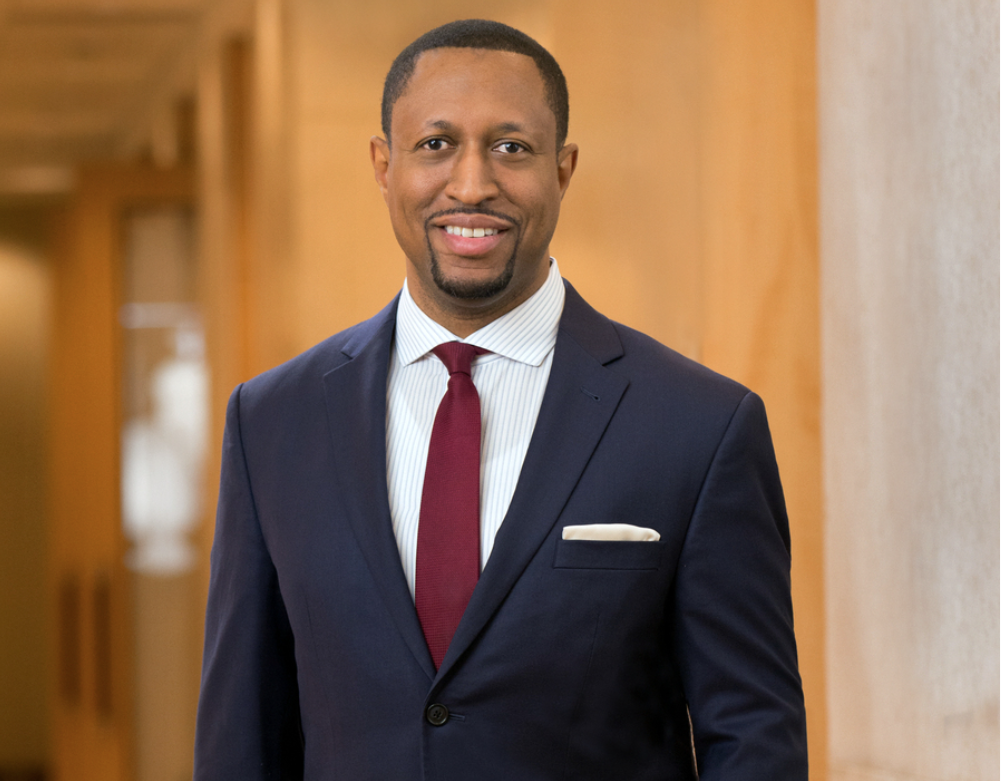
The NABL Member Spotlight initiative is a volunteer-based program. All featured members participate voluntarily and are selected to highlight their contributions and achievements within our community. Participation in the spotlight does not imply endorsement by NABL. If you would like to be featured, please contact us! Now, let’s meet Tray Hairston and learn more about his public finance journey:
1. Tell us a little bit about yourself.
I was born and raised in Jackson, Mississippi, the same city where my parents met at Jackson State University almost 60 years ago. My mother was a schoolteacher for 28 and a half years working with special needs children, and my father was a letter carrier for the United States Post Office for over 32 years. As a child, I spent my summers in Scott County, Mississippi on the farm with my grandfather where we would take care of the cows, ‘bush hog’ the pasture, go to the sale barn, fix ‘fence’ and ride horses late into the evening. I spent almost every 4th of July in Columbus, Mississippi with my dad. My grandfather, Felix Hairston, was born on the 4th of July. Although he passed away in 1986, all my uncles, aunts and cousins would still gather on Grandpa Felix’s birthday in Columbus, Mississippi. I’m a husband and father of three children who are all now in college. A few Christmases ago after complaining about being stressed, my wife bought me standup comedy/improv lessons at the Comedy House in New Orleans, Louisiana. I would make the drive every Sunday to attend class with an amazing group of people who were from all walks of life. Given my busy travel schedule, you might just find me on stage somewhere in a random city during open-mic night. I’ll never tell you when. Ever. Bombing will be my secret.
2. What inspired you to become a NABL member and how did your career in Public Finance start?
My first real job was in economic development, where I worked as a project manager in the Global Business Division for the Mississippi Development Authority (“MDA”) in 2004. In this role, I traveled throughout the U.S. and abroad recruiting new companies and investment to Mississippi. As a project manager, I always marveled at the work lawyers did in crafting and structuring economic development deals which often involved public finance. As a result, I yearned to be a bond lawyer, and it was at MDA that I first heard the name Attorney Frank Stimley. He was the mentor I never met.
Although I never got an opportunity to meet Mr. Stimley, he is still lauded in the public finance industry as one of the best bond lawyers Mississippi has ever seen and the first Black bond lawyer in Mississippi to earn the coveted distinction of being listed in the “Red Book”. He died on April 24, 2004, right after I began working in economic development at MDA. I credit Don Clark, the former Chairman of Butler Snow LLP, a role he served in for 14 years, for recruiting me to the firm in 2013 to start my career as a bond lawyer. I was serving as counsel and economic development policy advisor to Governor Phil Bryant when Don said he noticed me across the room at a conference. Don brought me into a practice area, public finance, where no Black lawyer at a major law firm in Mississippi had established a foothold and that invitation changed the trajectory of my career. I am eternally grateful to him for opening that door and his mentorship.
3. Is there a particular project or deal that stands out as especially meaningful in your career?
I served as bond counsel and disclosure counsel in connection with the issuance of the $20,000,000 Mississippi Development Bank Special Obligation Bonds, Series 2017 (Meridian, Mississippi Arts & Entertainment Center General Obligation Bond Project), a transaction that funded a substantial portion of the approximately $50 million financing used to create the Mississippi Arts and Entertainment Experience (“The MAX”) in Meridian, Mississippi. This project involved a distinctive public-private-partnership structure. The MAX is owned by the State of Mississippi and operated by a private nonprofit corporation created pursuant to special Local and Private Legislation. That legislation, which became law in 2005, also authorized the City of Meridian to hold a referendum to let the voters decide whether to levy an additional 2% sales tax on food and beverage throughout the city. Because the financing combined tax-exempt bonds with a specialized owner-operator arrangement, I assisted the city in providing a creative tax structure which addressed Section 141 of the Internal Revenue Code preserving the bond’s tax-exempt status. That work required careful coordination and negotiation among the State, the City, the Mississippi Development Bank as well as the nonprofit corporation to align The MAX’s operational goals with federal tax law requirements. This project was extremely significant, because it was the first Black mayor of Meridian, Mississippi, Percy Bland, elected in 2013, who put the referendum on a special ballot where 68% of the voters approved the 2% special tax in 2016 facilitating the issuance of the $20M used to finalize the construction of The MAX. This was quite notable because the referendum was approved 11 years after the legislation was initially passed in 2005, and Mayor Bland had the fortitude to campaign for the ballot initiative in the face of great political adversity given that his campaign for reelection was right around the corner in 2017.
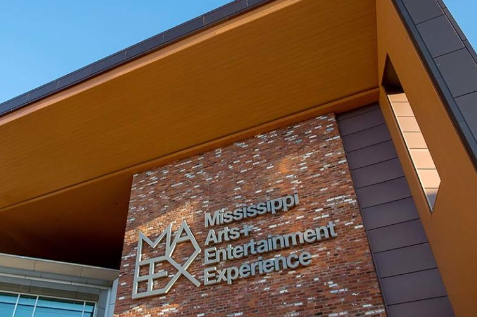
Opening its doors in 2018, The MAX is a 58,000-square-foot cultural destination featuring 15 permanent galleries and rotating exhibition space celebrating the legacy of Mississippi’s artists, entertainers, and musicians across a wide range of disciplines. Environments like The MAX make me appreciate that Mississippi Music and the Civil Rights Movement are powerful economic drivers for tourism in Mississippi because they offer globally significant, emotionally resonant and uniquely local narratives that attract both domestic and international visitors. Music, specifically, the blues and civil rights tourism are more than nostalgic draws. Those genres represent Mississippi’s global cultural export and moral legacy. They convert the state’s complex history into economic opportunity, community revitalization, and cultural pride, making them foundational to Mississippi’s tourism economy. Since the opening of The MAX in 2018, the City of Meridian, Mississippi has seen billions of dollars in capital investment. I firmly believe that The MAX has played a meaningful role in Meridian’s ongoing downtown revitalization, tourism economy, cultural resurgence, workforce development in the announcement of a $10B data center and its quality of life with attractions like a children’s museum and the renovation of a 16th story art deco historic rooftop hotel.
My mentee and law partner Charity Karanja and I also served as underwriter’s counsel to Oppenheimer & Co., Inc., in connection with a $140 million Development Authority of Fulton County, Georgia Revenue Bonds (Spelman College), Series 2026 transaction. The proceeds of the bonds were used to finance the construction and equipping of a new 230,000 square foot 622 bed Residence Hall for Spelman College. The transaction constitutes the largest deal in the college’s history and the first new residence hall this century.
4. Having attended NABL conferences, how have these events helped you develop professionally?
As a young bond lawyer, I attended The Fundamentals (now referred to as The Essentials) and The Bond Attorneys Workshop (now The Workshop) over the years. Without reservation, I can say that attending The Institute in San Diego in 2025 was immensely beneficial to me because of the small course size, which reminded me of my liberal arts experience at Tougaloo College. That intimate setting has always been where I learn best. At Tougaloo College, small classrooms meant that professors knew your name, challenged your thinking directly, and held you accountable to the material in ways that large lecture halls simply cannot replicate. The Institute offered that same energy. With fewer attendees, there was more room for genuine dialogue, deeper engagement with panel leaders, and the kind of peer exchange that sharpens your understanding in real time. I did not just absorb information; I wrestled with it alongside colleagues who were equally invested in getting it right. That is the difference a smaller setting makes, and it is a difference I have felt at every stage of my career.
5. Do you have any advice for new attorneys?
Find a good mentor. And strive to one day become a mentor yourself.
I say that not as a platitude, but as someone who has lived it from both sides of the table. Early on in my career, there was no one in my firm I could call on who looked like me who did the work I did. On a trip to New Orleans to visit a client, I cold-called Wayne Neveu, a Black partner at another firm at the time who I had heard of and respected what he had built. Wayne didn’t have to answer. He did not have to engage, but he opened his door to a stranger who needed a guide, and that meant everything.
Wayne shared what he knew freely. He modeled what it looked like to build a law practice with integrity, to carry yourself with excellence and to remain fixed in who you are even in rooms that were not designed with you in mind. That relationship grew over the years, and in 2020, right before the world shut down during the pandemic, Wayne joined me at Butler Snow. What started as a cold call became a partnership. That is what mentorship at its best can become.
Years later, I found myself on the other side of that table. When I extended an offer to my colleague, Charity Karanja, over lunch, I was not just recruiting a lawyer. I was trying to do for her what I wanted for me and what I pray she wants for herself. I handed her a copy of the Fundamentals of Municipal Bond Law, cast a vision for what public finance could be and told her what I genuinely believed: that this work could be intellectually demanding, deeply practical and capable of shaping communities for the better. Watching her grow into a talented tax lawyer and bond lawyer has been one of the great privileges of my professional life.
What I have learned is this: mentorship is not a transaction. It is not a line on a resume or a box to check. It is a form of servant leadership. It is showing up for people even when life is full, transferring expertise freely (i.e., not hoarding knowledge), and treating the person across from you as someone worth your time and attention. In a profession that can feel like a closed loop, mentorship is how we break the cycle. Someone opened a door for you. Your obligation is to hold it open for the next person coming through.
So yes, find a good mentor. Study them. Learn from them. And when your time comes, and it will come, be the mentor someone else needs.
6. What is something that people might not know about you?
Most people in the professional world know me as a bond lawyer and economic development lawyer working on bond transactions, incentive packages, fee-in-lieu of tax agreements, hotel projects, industrial developments or data centers. What they might not know is that I have a deep and growing commitment to public speaking on matters of belonging and what it truly costs to be Black in professional spaces.
In August 2025, I had the privilege of delivering the Presidential Convocation Address at Tougaloo College, my alma mater, before incoming students, faculty, trustees, and alumni. The speech, titled “Celebrating Our History: Anchored in Excellence, Rooted in Social Justice, and Poised for the Future” was published in its entirety by The Jackson Advocate. In it, I spoke candidly about the moments in my own career when I considered leaving Mississippi, when I felt unseen, undervalued and not given the same chances as others who did not walk my path or look like me. I spoke about staying anyway and about the obligation each of us carries to change the systems that push people out.
That speech grew from something I have been building the courage to say out loud for a long time. Public finance is my practice. Mississippi is my home. But truth-telling on matters of race in the law has become my calling. And I am just getting started.
Registration for The Institute is Open!
We are taking The Institute to sunny California next year! Attendance is limited to 100 participants to preserve the program’s highly interactive nature. Hosted at The Ritz-Carlton, Rancho Mirage, February 4-5, 2027.