- News
A Busy Year for Muni Advocacy
Where we’ve been in 2025, and what’s ahead in 2026.

By: Brian Egan, Chief Policy Officer, NABL
We wrap up the year with a slightly quieter month on the advocacy front than those of recent years. This December, however, marks the end of a significant year for municipal advocacy, and members of Congress will return in January to a long list of pressing items. We wanted to make sure NABL members had some holiday reading, so here is a recap of 2025 and a roadmap for what’s ahead next year.
+400Advocacy Actions
Taken by NABL and its members this year.
126Advocates
NABL members rising to the occasion.
6Comment Letters
Sent on behalf of NABL members.
Recapping the Year
From a new administration and Congress to a 330-page tax reform package, 2025 was a historic year for NABL advocacy and the municipal market in general. Here’s a rundown and a recap of this year’s key developments:
Talking Tax Reform
Even before the 2024 elections, we knew one thing for certain: Congress would be talking tax this year. The pending expirations of major provisions of the Tax Cuts and Jobs Act (TCJA) of 2017 scheduled for the end of this year teed up a tax cliff that would require the attention of Congress and the Administration regardless of which party took control. Municipal market participants also know that when Congress talks tax, everything is on the table, including municipal bonds. NABL spent 2024 preparing for these realities: updating key statistics on what the tax exemption means to communities across the country; launching our updated advocacy center; and laying the ground work for a strategy to defend bonds.
The threat became real in January when the House Committee on Budget published its now infamous “menu of options,” which listed numerous revenue raisers as potential offsets for a forthcoming tax bill. Line items targeting both the tax exemption for governmental bonds and qualified private activity bonds (PABs) were among the 50-pages of proposals. The document’s release sent the entire market into full-time advocacy mode. As the threats continued to emerge and evolve, we were there tracking it in real time and keeping members informed. While the final bill contained numerous provisions of concern to state and local issuers, and non-profit borrowers—advocates were ultimately successful in our main objective: preserving the tax exemption on municipal bonds. A special thank you to the 126 NABL community members and staff who undertook more than 400 advocacy actions in 2025 to make our mission a success.
New Administration, New Faces, and New Policy Priorities
The opening salvo of tax reform was not the only change in January. We also welcomed a new Congress, a new Administration; and a fair amount of disruption. One of the Trump administration’s first actions was to issue a memo (M-25-13) that instructed the heads of federal agencies to temporarily pause grant, loans, and other financial assistance programs until a “complete a comprehensive analysis” to ensure such programs complied with the administration’s recent directives. The memo was quickly rescinded, but the stark shift in policy priorities remains. President Trump has already issued 221 executive orders in the past 12 months, more than the total issued by the prior administration over four years. More importantly, many of the orders directly or indirectly impact issuers and borrowers, and remain pending in judicial proceedings.
Tariffs, Inflation, Quantitative Easing, and Market Performance
On April 2, the President announced “Liberation Day,” a broad array of tariffs on nearly every country that sent financial markets, including the municipal market, into distress. The move led to an intense selloff in the municipal market, plummeted fund returns, rocketed yields, and virtually cleared the deal calendar. A series of delays, judicial actions, and general market acceptance to the new status quo have mostly stabilized markets—but the persistence of tariffs and slightly elevated inflation continue to impact project finance in other ways.
The story on inflation remains mixed. Core inflation has mostly hovered around three percent this year, just slightly over the Federal Reserve’s target rate. Specific sectors of the economy critical to project finance, particularly construction materials facing import tariffs, continue to experience much higher rates. Despite some signals of persistent inflation, the Federal Reserve has acted on its dual mandate—balancing inflation and employment—and moved to implement three consecutive rate cuts since September.
Despite some of these headwinds, the municipal market has enjoyed a good year overall. New issuance soared to more than $550 billion in 2025, representing a 10 percent increase over last year’s record-breaking issuance. And, analysts forecast another solid year for municipals in 2026.
Longest Shutdown in History
Congress rarely completes its appropriations duties before the end of the fiscal year on September 30, but this year’s 43-day federal government shutdown blew past historic records. During the lead up to September, Democrats demanded that any appropriations package include an extension of tax credits for Affordable Care Act (ACA) plans set to expire on December 31, 2025. Speaker Mike Johnson (R-LA) held a House vote to pass continuing resolution (CR) without provisions to address the ACA credits. He then promptly adjourned the chamber, teeing up an impasse without any solution in sight. Senate Democrats continued to reject the House-passed measure, urging House Republicans to return to Washington, D.C. and negotiate. Both sides continued to hold out until leadership reached a stopgap compromise in November to fund the government through January 2026 in exchange for a promised vote on the ACA credits in December. To date, the House has not passed an ACA credit extension. While the CR brought a close to the longest federal government shutdown in history, without a solution on the ACA credits, it merely punts the issue to January.
Year Ahead
Election years tend to be quieter on the tax legislative front. By spring, the upcoming midterm elections will consume much of the attention in Congress. What bandwidth does remain will likely be needed to get a series of must-pass legislation across the finish line. While a threat to the tax exemption may not be on the immediate horizon next year, a long to do list for Congress may have indirect consequences to the municipal market. Here’s a rundown of the must pass and the maybe pass items we will be watching:
FY2026 Appropriations
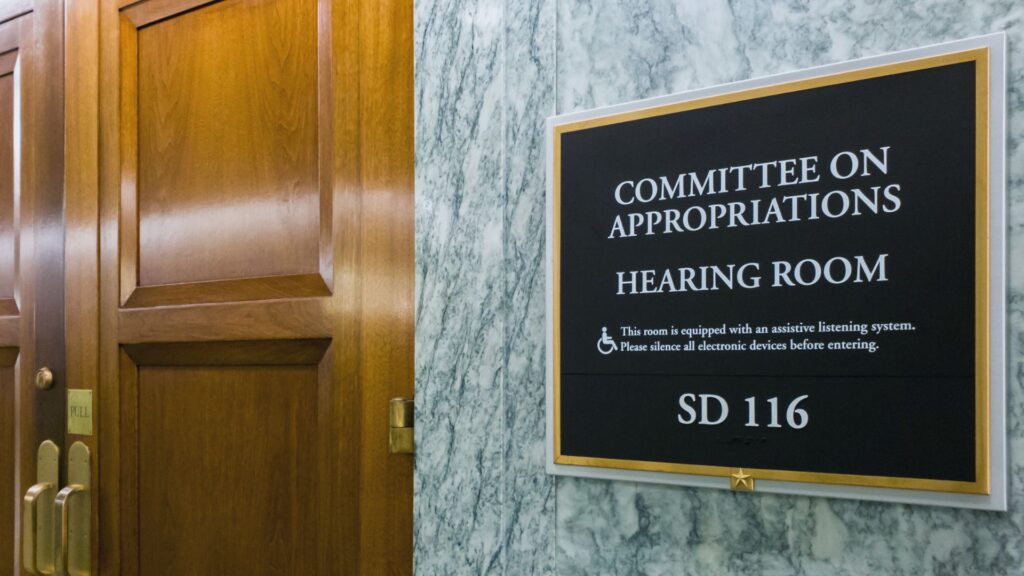
As mentioned, the 119th Congress will return to Washington, D.C. in January with the urgent task of addressing FY2026 appropriations and staving off a second government shutdown. In November, Congress passed full year appropriations for four of the 12 appropriations areas, meaning the remaining eight areas continue to operate on last fiscal year’s numbers. Congress now has until January 30, 2026, to address full year appropriations, pass another stopgap measure, or risk a partial government shutdown.
Housing Reform?
Congress passed the National Defense Authorization (NDAA) Act for FY2026 (S. 1071) on Thursday. While the final version did not include any provision of immediate consequence to the municipal market, earlier versions of the NDAA did include a major piece of housing reform legislation. The Renewing Opportunity in the American Dream (or “ROAD”) to Housing Act (H.R. 2651) proposed significant changes to federal housing policy, mostly designed to increase housing supply. If enacted, the bill would have incentivized state and local governments to ease restrictive zoning and land use laws and reduce regulatory burdens on construction. The bill would also make the Community Development Block Grant Disaster Recovery (or “CDBG-DR”) program permanent, so communities would no longer need to wait for congressional action in the wake of a disaster. NDAA negotiators ultimately nixed it from the final package as there was insufficient time for House Committee hearings, but the bill has major bipartisan support. Meanwhile the House Financial Services Committee has recently advanced its own parallel package, the Housing for the 21st Century Act (H.R. 6644). Housing remains a rare area of bipartisanship that could see some forward movement in an election year.
Surface Transportation Reauthorization
Congress passed the Infrastructure Investment and Jobs Act (IIJA) in 2021, which included a host of new spending designed to spur infrastructure investment but also reauthorized a host of surface transportation programs for a 5-year window. Many of these programs now expire at the end of September without further congressional action, almost certainly teeing up significant discussion on infrastructure in 2026. While the programs itself do not directly impact municipal bonds, this large “must pass” legislation presents a logical vehicle for other bond-related provisions to hitch a ride. Proposals like restoring tax-exempt advance refunding, modernizing the small borrower’s exemption, and expanding private activity bonds would all expand and incentivize greater investment in surface transportation. Proponents in the public private partnership (or “P3”) space will certainly push to include a provision to elevate the volume cap on qualified highway or surface freight transfer facility bonds. Borrowers have again exhausted the nationwide cap, which was previously raised from $15 billion to $30 billion under the IIJA.
Farm Bill
Congress has relied on a series of short-term extensions since 2023 to address expiring provisions of the Farm Bill, which authorizes most of the U.S.’s agriculture, food, and rural policy programs. While the expansive bill historically does not address municipal bonds directly, it typically does include a number of financial programs geared toward supporting farm and rural development. As another critical “must pass” piece of legislation, it presents another opportunity for bills like the Modernizing Agricultural and Manufacturing Bonds Act (or “MAMBA”) to hitch a ride. MAMBA would update sections of the code relating to small issue and first-time farmer bonds.
Return of FDTA?
There have been few updates on the Financial Data Transparency Act (FDTA) front since the collection of financial regulators released their joint proposed rules in August 2024. The statute required regulators to finalize their joint rules, which are the first of two major phases in implementing structured data standards, by December 2024. Regulators may return attention to the task of finalizing the joint rules in 2026, which would begin the two-year deadline for the SEC to then propose and finalize their rules on how such standards would apply in the context of submissions to the MSRB.

From NABL to you and your family, we wish you a Happy Holidays and New Year. We look forward to seeing and keeping you updated throughout 2026!